


ACERTA Certificacion
CEO & Managing Director
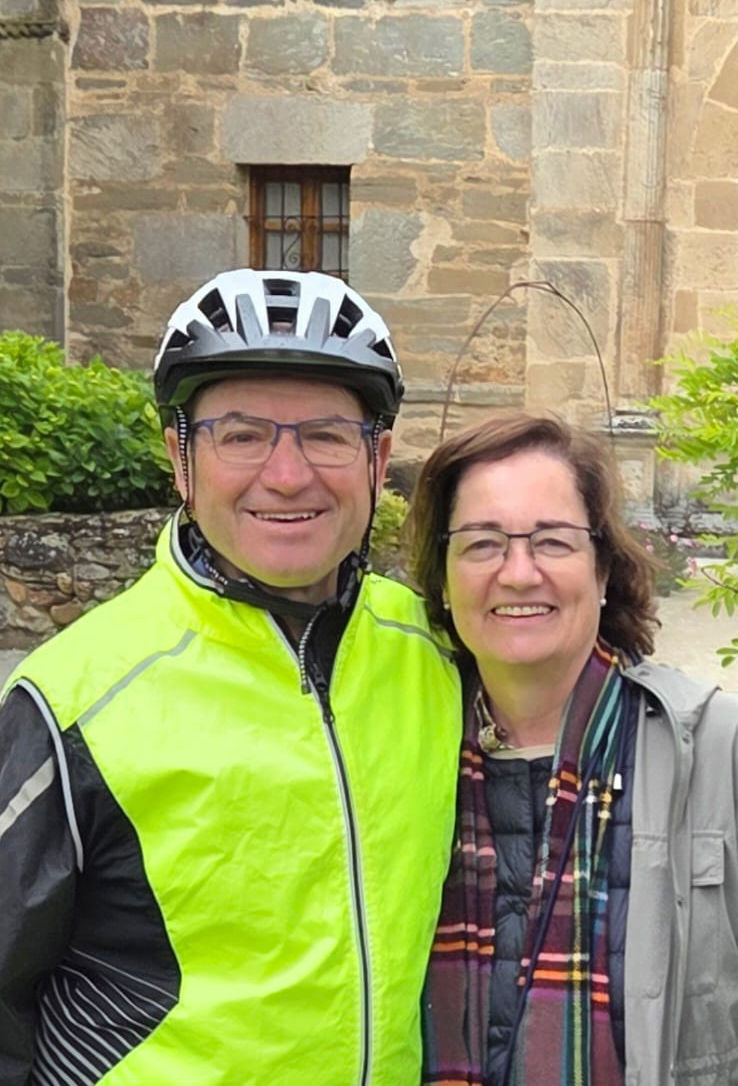
This week we are catching up with Matías who is the CEO and Managing Director of ACERTA Certificación, S.L., an independent, accredited Madrid-based certification body.
ACERTA specialises in certification services for food safety, quality, sustainability as well as research, development, and innovation projects.
sad32f43f43.jpg)
Can you tell us about your trajectory and how you started in the TIC+ sector?
In 1998, I was leading the consulting division of a small- agri-food engineering company, from which we advised an association of meat industry companies on quality and regulatory compliance. This association promoted a European quality label—an ETG—that required third-party certification, and we saw an opportunity to enter this field.
The idea was innovative at the time, but its potential was already evident, which allowed me to find partners and capital to establish the company that I led until June 2003, when it was acquired by a multinational in the sector.
The strategy of the new owners diverged significantly from my vision of the business, and they decided to dispense with my professional services, so I had to start again. Thus, in 2004, ACERTA was born, where we have been able to develop a pure certification project that continues to grow year after year, and where we remain at the forefront in an increasingly consolidated sector.
Tell us a bit about your hometown: what makes it special to you?
Madrid is a city of contradictions. Many people avoid it because of traffic, congestion when entering and leaving, or the difficulty of parking, and prefer to live outside. Paradoxically, this worsens the problem, because most are still drawn to return daily or at least frequently, even at odd hours.
At the same time, it is an extraordinarily convenient city for socializing. Its manageable size for a capital, its vibrant commercial life, the practically endless offer of bars and restaurants, and a high-level cultural and leisure agenda make it a very difficult environment to match. Added to this is the intense blue of its sky, which is truly inspiring.
In recent years, there has also been a clear effort to strengthen its international visibility. For a long time, Barcelona was Spain’s main urban reference abroad, but various political and economic circumstances have gradually shifted the focus toward Madrid.
A striking fact that few people know is that Madrid is the European capital with the highest number of trees.
In short, it is a city that can be greatly enjoyed, as long as you don’t let yourself become its slave.
Can you share a specific project or achievement you are particularly proud of, and why?
More than a specific technical milestone, I am especially proud of having shaped the company’s idiosyncrasy.
To me, companies are living organisms that act, grow, feed, and fall ill… and their tissues and organs are made up of people. If these people are healthy, the structures they form function better, both internally and externally. We aspire to be a competent, reliable, and easy-to-work -with organization, because we believe business works better among those who embody these qualities.
ACERTA’s core values have always been integrity and excellence, and our entire team truly embodies them.
In this sector, the real competitive advantage does not lie in processes, but in judgment and the quality of people, who are the ones that generate trust among clients, standard-setters, accreditation bodies, and public administrations.
This trust is built, as it must be, on consistency in work, but also—and very importantly—on the quality of the relationships we offer. That balance between technical excellence and human closeness is difficult to achieve, and we are very proud to consider it one of our main distinguishing features.
“I would like my legacy to be that, above all, people are respected at ACERTA, and that respect and trust are understood as non-negotiable.”
What role do you think business leaders should play in building a better future for society?
There are many types of business leaders, but we could simplify them into three: visionaries, who imagine what does not yet exist and see opportunities where others see problems; promoters, who grow ideas into organizations; and executives, who turn ambition into tangible results. All are necessary, and finding the right balance among these profiles is part of the art of building a company.
At their core, however, they all share something: a vision of the future. They are people who need to project themselves beyond the present, to see how their intuitions take shape, how their decisions generate progress, and also how mistakes sometimes turn into learning.
In a way, they are one of the forces that push society forward. Although the final direction of that evolution does not depend solely on them, but on broader and more complex dynamics. The world is giving us a good lesson on this right now.
Even so, there is something within their control. Some leaders understand the company as a space of balance, where their own progress is not built at the expense of others, but alongside others—there are leaders who operate with a win-win logic with the people and environments they interact with.
I believe those are the leaders who help build a better future.
Can you tell us about the biggest challenges you have faced in your career and how you overcame them?
Without a doubt, the greatest professional challenge I faced was building a new certification company after the abrupt and involuntary departure from the first company I founded. Being excluded from that project overnight and unexpectedly was a complex situation—not so much because of my personal circumstances, but because of the people who chose to accompany me.
I was starting from scratch again, but with much greater pressure to deliver results than in the first stage. Overcoming that situation with reasonable success required an enormous collective effort, significant financial sacrifices, and the definition and execution of a very precise plan, with almost no margin for error.
We had to sustain a team of about ten people until we regained the necessary accreditations to be able to invoice. It was more than two years of maximum tension. I secured some external financing, but it was clearly insufficient, so at one point I decided to personally capitalize the project: I sold my house to make it viable. I remember moments of real vertigo.
However, more than twenty years later, I believe that experience allowed us to fully understand our limitations and strengths and, above all, to realize that loyalty is not just a value but a critical pillar in business activity. It also taught me the importance of being able to fully trust people—the team, clients, and collaborators—because only from that trust is it possible to focus energy on objectives.
In the end, you realize that trust is the oxygen of human relationships. That’s why, at ACERTA, we know that to build a stable business, the first step is to create a real environment of trust. Our motto sums it up well:
“We build confidence.”
What do you hope your legacy at ACERTA will be?
The main thing is that I see ACERTA existing ten years from now. That is, I firmly hope this organization will continue to exist independently, adding value to society. I imagine it larger, more professionalized, and competing in more sectors.
And although I still see myself in it by then, I would like my legacy to be that, above all, people are respected at ACERTA, and that respect and trust are understood as non-negotiable.
What do you think is the most important challenge affecting the TIC+ sector right now?
I can give my opinion on the “C”—certification.
The main challenge [of AI] for the certification sector is managing a complex transition: moving from a people-intensive model using on-site audits to one where technology—especially artificial intelligence—will redefine both how evaluation is carried out and what “evaluation” really means.
AI will allow automation of relevant parts of the process: document analysis, consistency checks, risk identification, and even evidence review. This opens the door to much more efficient and scalable models. However, it also introduces a critical tension: if all players have access to similar tools, the risk of commoditization is high.
At the same time, the traditional auditor model—technical specialist with accumulated experience and willingness to travel—is in crisis. It is increasingly difficult to attract and retain talent willing to adopt that lifestyle. This forces a rethinking of the operational model: more remote evaluation, greater use of data, more specialization, and new forms of hybrid audits combining remote, assisted, and on-site elements.
However, in this transformation process there is a risk the sector cannot afford: diluting the human component to the point of eroding trust. Conformity assessment is not just a technical exercise; it is ultimately an act of professional judgment. Trust is not built solely with algorithms. In my view, maintaining a strong human core will remain essential for certification to continue being a high-value service.
All of this is compounded by the speed of technological change compared to the rigidity of regulatory and accreditation frameworks, which may hinder adaptation if they do not evolve in parallel.
In this context, the strategic challenge is not simply adopting AI or attracting talent, but redefining the evaluation model so that it remains relevant. Those who succeed will be those capable of integrating technology and expert judgment without sacrificing trust. Because ultimately, the market does not demand evaluations, but professional judgments it can trust.
If you could speak to your 20-year-old self, what would you say?
This question has a humorous side. I think I’m not the only one who ages faster on the outside than on the inside. My inner self is still very similar to what it was 20 or even 40 years ago.
In any case, time does help you mature in certain aspects and teaches you to appreciate facets of life that previously seemed less important or went unnoticed.
I would tell my 20-year-old self many things, but the two most important would be: from a human perspective, that successes and failures are better understood and handled when you are surrounded by good people; and from a professional perspective, to invest in surrounding yourself with people who help you make decisions.
When you think about the world your grandchildren will inherit, what do you hope we will do right?
I am not very optimistic about the world our grandchildren will inherit, at least in terms of the values and interests that motivate me. I believe there are significant risks in the challenges ahead. I would like to think humanity will still be relevant in 50 or 100 years, but sometimes I feel that the science fiction of Asimov or Arthur C. Clarke may actually fall short.
My main wish is that we find a balance in technological development that allows human beings to remain in charge of their own evolution. But also that we are capable of preserving something as basic as peace, advancing toward truly sustainable models—not only environmentally but also socially—and having leaders who rise to these challenges with vision, responsibility, and a long-term perspective.
“there is a risk the sector cannot afford: diluting the human component to the point of eroding trust”
